
Inside the Shark Island Kangaroo Valley DocoLab
Filmmaker Joseph Nizeti and Residency Director Samantha Chester on what happens when documentary teams step away from everyday life and into the valley
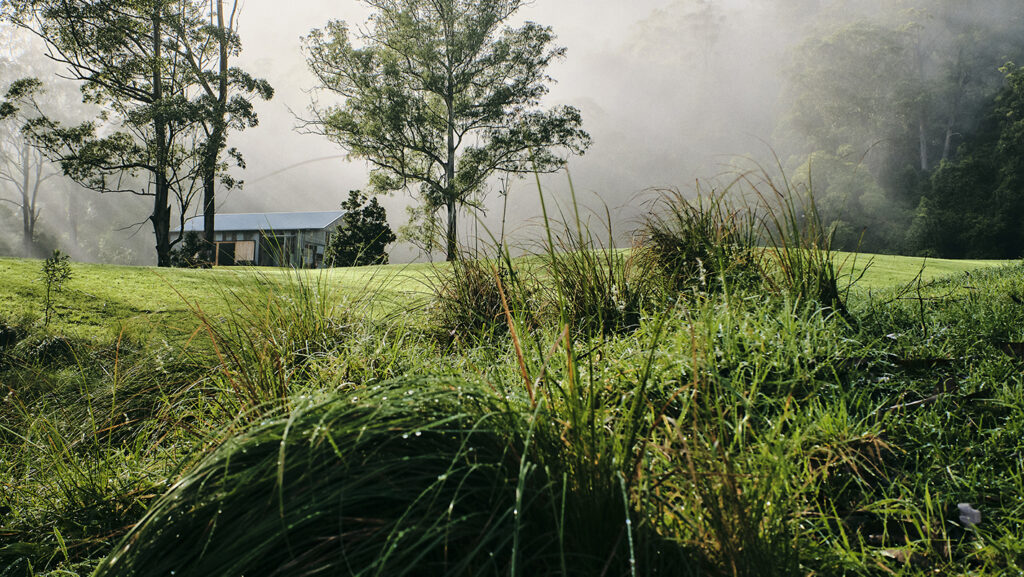
As the Shark Island Kangaroo Valley DocoLab gears up for its second year, a new cohort will be selected through AIDC 2027’s Cut to the Chase meetings marketplace. Offered as part of the Shark Island Foundation Feature Docs Pitch, the DocoLab gives two practitioners from each funded project a four-day creative residency at Shark Island Kangaroo Valley in New South Wales, 11-14 May 2027.
We spoke with the lab’s facilitator, Joseph Nizeti, and the Residency Director at Shark Island Kangaroo Valley, Samantha Chester, about what the DocoLab is for, what makes it different, and what the first cohort took from it.
Joseph Nizeti - DocoLab Facilitator
Co-director and co-writer of River (2021) with Jennifer Peedom, writer and director of the ABC Arts documentary Anatomy of a String Quartet (2022), and co-writer of OneFour: Against All Odds (2023), Nizeti is also a versatile composer, music producer and story consultant working with artists and filmmakers across the Australian film and music industry.
What are the main goals of the DocoLab for participants?
“Every story is different and every team is different, and it’s really never too early – or late – to think more deeply about your story and how it’s going to unfold as a journey on screen for an audience,” he said.
“The goal of the lab is to give teams quality time together to get closer to the heart of the story they’re all working so hard to bring to life. Having the space to focus, without the distractions of everyday life, where the art can really be at the centre of all the conversations, both inside and outside of sessions, is quite magical.
“Ultimately, it’s about meeting each team where they are and helping them figure out where they want to take their story next. Whether that’s navigating external feedback, continuing the journey of attracting finance and support from the marketplace, or preparing to go into production, the lab is there to support each team as they move forward in a way that is tailored to each team.”
What sets it apart from other labs and workshops?
“It’s about creating an environment where people and teams can learn and grow from one another, and feel that support from the other teams going through the lab in the same cohort. The location, for one, is just amazing. It’s an incredible retreat in Kangaroo Valley, and the thought and care that has gone into the property is really special. It means you can clear away all those normal distractions that you’re battling as a creative person and really focus on the work.”
What do you bring as a facilitator?
“One thing I love about working in documentary in particular is that people often come from such different professional and personal backgrounds. Over the past ten years, I’ve had the opportunity to work on many films and series, with all kinds of teams, companies and creatives. I think what I bring is that wealth of experience around how different individuals and teams work together. I enjoy seeing all those different dynamics and the unique alchemy that you get within every combination of key collaborators on a project, whether that’s a director, producer, editor, writer or participants. Coming from a performing arts background as a musician, I find in-person collaboration really magical, and revel in that chance to support an unfolding creative process.
“On the craft side, I also have a real fascination with the mechanics of how stories come together. How they can open up the world in new ways for an audience, and take us on journeys that can be emotional and lasting.”
Looking back on the inaugural lab
“Working with Kate [Hodges – Executive Director, Shark Island Foundation], and Sam [Chester] to devise that first workshop in 2026, we didn’t know for sure how it might all play out. It was an ambitious starting point, with the three of us working alongside the on-site staff to guide four different teams through in one go. Could we find that right balance, where there was a sense of shared experience playing out across all the teams as well as a more tailored experience for each group? It was really special to see it all come together, and to hear from the teams that they felt they were getting something genuinely unique and valuable out of the experience.
“What was particularly rewarding was seeing how it wasn’t just helping to inform how they would move forward with their projects, but giving them a real feeling of momentum and excitement and possibility around taking on those next steps together.
“And then there were all those personal connections with the teams over meals and in the quiet in-between moments. Being in such a beautiful location, listening to music together and looking out at the trees and the animals hopping around outside was just a beautiful experience I’ve often found myself thinking back to.”
JOSEPH NIZETI
Samantha Chester - Residency Director
Over the last decade, Shark Island Kangaroo Valley has hosted more than 100 residencies and creative development labs for documentary filmmakers, artists, actors, musicians and writers. Residency Director Samantha Chester shares the story behind it.
What inspired the residency program, and how many creatives has it hosted?
“Shark Island Kangaroo Valley grew from the vision of its creator, Ian Darling, and since 2014 it has been driving story impact, support and creative sustainability. That year it welcomed Good Pitch for the first time, just as, legend has it, the builders were hammering in the final nail,” Sam explains.
“From 2014 to 2016, Shark Island Institute and Documentary Australia Foundation presented three landmark Good Pitch Australia events at the Sydney Opera House. These raised more than $15 million in philanthropic grants for 19 selected social impact documentaries and their impact campaigns. Shark Island Kangaroo Valley then hosted 24 residencies for these films, covering development, production and impact.
“Since then, the program has opened up to other organisations. It began with a focus on documentary film and later welcomed writers, visual artists, theatre makers and musicians. To date, it has hosted more than 100 residencies and supported over 1,300 artists.”
What does a residency provide that’s different from support elsewhere?
“I would say it is holistic. All the artists’ needs are thought about and tended to in ways that are incredibly generous, yet never ostentatious. The spaces have been curated so that you walk from place to place, and the hidden treasures you discover along the way remind you that wonder and awe are still possible.
“Then there is the natural environment: the uniqueness of the valley and its deep connection to many First Nations peoples. It has long been a meeting place. Parts of the landscape and escarpment are between 200 and 400 million years old. It is this sheer truth: the chance to look up and out, and to be held for a time without distraction or pressure. There is true community to be found here.”
What did DocoLab participants say about their experience?
“My background is in working in theatre and dance for over 20 years, and I am particularly interested in the idea of insight that comes through creative practice: intuition and ways of seeing material anew. So I offered the DocoLab participants a range of experiences in the body, exploring embodied storytelling, movement and collective art making. I was so grateful that everyone threw themselves in. Some participants said these experiences gave them different ways into the stories they were working on and how those stories could be shaped on screen. This was exciting.
“I can’t wait to welcome the next group of filmmakers in 2027.”
SAMANTHA CHESTER
From the teams
“The Shark Island Kangaroo Valley story residency gave our team the time and space to set everything aside and find the threads of deep resonance in our story. In a stunning, nurturing setting where dreaming and collaboration are truly valued, and in community with other teams, our development has flourished, bringing the film closer to production. At such a time, this is precious.”
– Estranged team – Olivia Martin-McGuire, Rebecca Barry, Brooke Silcox, Jack Martin
“Cut to the Chase and the Kangaroo Valley story development residency came at a pivotal moment for The Dig. The residency gave us the time, support and creative encouragement to really launch into development and begin finding the film’s shape. We’ve come such a long way since, and so much of that momentum began with those conversations in Kangaroo Valley.”
– Matthew Bate, Director, The Dig
Pitch for a place in the 2027 DocoLab
Shark Island Kangaroo Valley DocoLab placements are offered as part of the Shark Island Foundation Feature Docs Pitch and are exclusive to projects pitching through AIDC 2027’s Cut to the Chase program.
Read the announcement for next year’s Shark Island Foundation Feature Docs Pitch, and visit the initiative page to learn more about eligibility and how to apply through Cut to the Chase. The deadline for Cut to the Chase applications is Friday 29 January 2027, 23:59 AEDT.
IMAGE CREDITS: Photos by Adrian Lander